
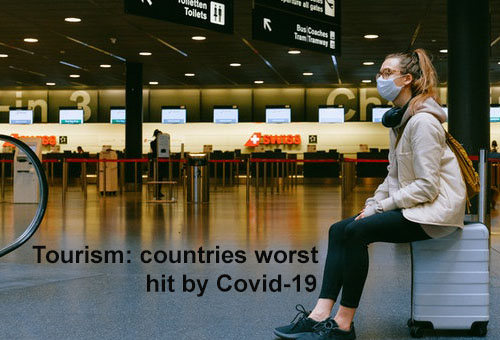
While popular destinations are slowly reopening and tourism
is beginning to pick up in some spots, the impact of the pandemic on the
industry has been nothing short of devastating. Many countries that heavily
rely on the revenue from tourism lost one of their main sources of wealth
almost overnight back in March, but which are likely to be the hardest hit?
Mexico is the most vulnerable of the world’s largest
economies, as 15.5% of its GDP relies on the travel and tourism industry.
Statista, the online portal, which provides data on the
global digital economy, has compiled a list of those likely to be worst
affected based on 2019 figures from the World Travel & Tourism Council
(WTTC).
Mexico is closely followed by Spain and Italy as per the
Statista’s list. Already among the countries with the highest coronavirus death
tolls, the European destinations are also likely to be among the most affected
by declining tourism due to their dependence on revenue from visitors, which
contributed 14.3% to Spain’s GDP last year and 13% to that of Italy’s,
according to WTTC.
After issuing one of the strictest lockdowns in Europe — at
one point adults were only allowed to leave their home to buy food, medicine or
take their dog for a walk — Spain has been keen to revive its struggling
tourism industry, reopening its borders in the past month to all EU countries
and approved third-party countries.
Meanwhile, Italy reopened to travelers from the EU, along
with the UK and the microstates and principalities of Andorra, Monaco, San
Marino and the Vatican, in a move the government described as a
“calculated risk.”
However, coronavirus cases have risen significantly in Spain since
restrictions were lifted, with some sections being issued with a second lockdown.
Italy has also experienced a slight rise in cases since easing restrictions,
indicating the recovery process is likely to be slow with potential stops and
starts.
The impact on the US, the world’s largest economy, has been
less significant, with tourism only accounting for 8.6% of its GDP, which is
based on various contributions, including revenue from hotels, travel agents,
airlines and restaurants.
However, WTTC indicates the total contribution from travel
and tourism accounts for around 16.8 million jobs.
The US has the world’s highest Covid-19 death rate, according
to data from Johns Hopkins University.
France sits just below the US on the list, with tourism
making up 8.5% of its GDP in 2019, followed by Brazil at 7.7%. Perhaps
unsurprisingly, declining tourism is likely to have few financial ramifications
for South Korea, with the tourism sector only accounting for 4.2% of its GDP
last year.
While top destinations have been pulling out all the stops to
tempt travelers back, it seems it’s going to take time for the industry to rebound,
and experts have suggested things may never return to the way they were
previously.
“I’m not sure it [the travel sector] will ever be
identical to the way it was [pre-Covid 19],” says Lori Pennington-Gray,
professor and director of the Tourism Crisis Management Initiative at the
University of Florida, told CNN Travel earlier this month.